
What Makes an Artificial Christmas Tree Look Real
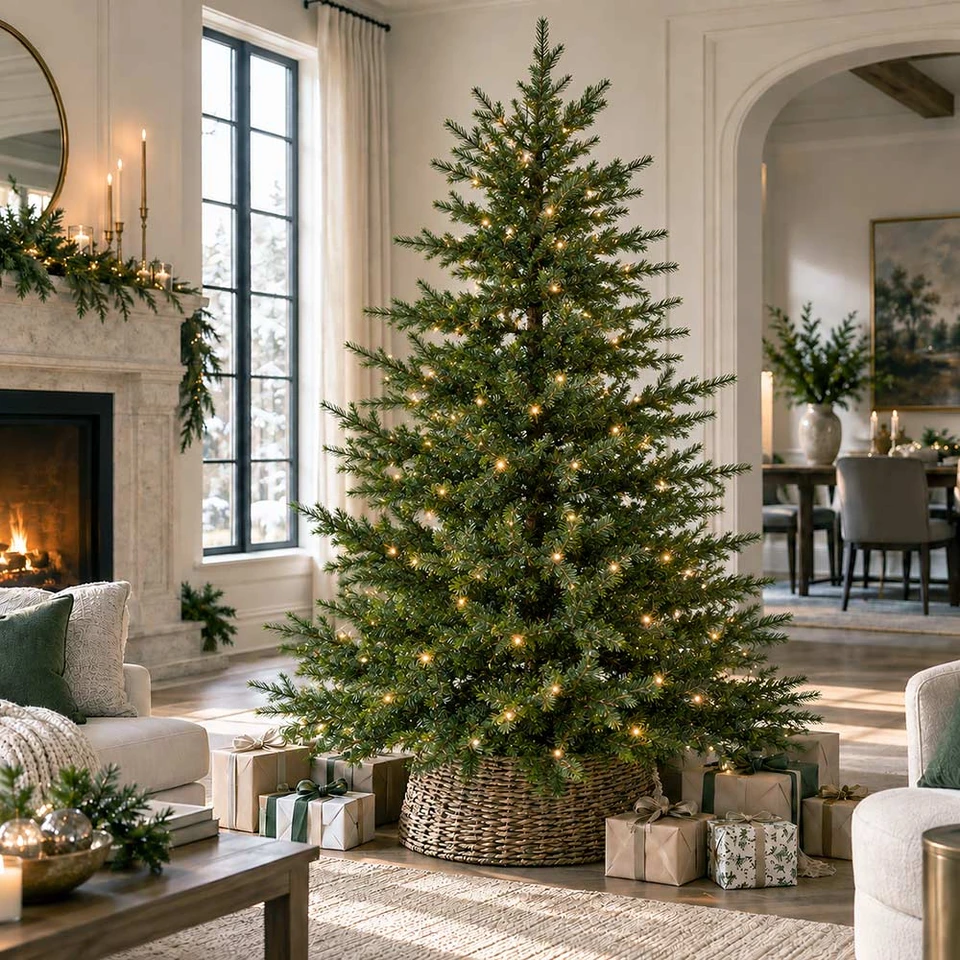
Nothing captures the season’s magic like a beautifully lit evergreen—real or artificial. While some artificial Christmas trees still look overly plastic, today’s best designs can fool the eye at a glance. Advances in materials, molding, and lighting have brought the look and feel of a natural Christmas tree into the living room with astonishing realism.
True-to-life results don’t hinge on one feature; they come from a careful combination of needle materials, color gradation, branch structure, density, and lighting design. The biggest leap has come from molded PE needles that mirror real branches, paired with natural silhouettes and warm, well-placed lights. Understanding these elements is the key to spotting which trees genuinely look grown—not manufactured.

A naturally irregular silhouette adds believable depth. View the Victorian Fir
Key Takeaways
- The most lifelike artificial trees feature a high proportion of PE—ideally 65%+ True Needle PE foliage—paired with multi-tonal needles and brown stems, a layered, slightly imperfect silhouette with a high tip count, and warm micro-LED lighting with hidden wires.
- Molded PE needles replicate the 3D shape and texture of real branches for a convincingly natural look, while flatter PVC appears artificial up close, so mixed trees with PE on the outer tips and 65%+ True Needle PE foliage deliver the best realism.
- For a lifelike finish, thoroughly fluff from the bottom up, shape every branch tip in varied directions, place some lights and ornaments deeper to add depth and hide gaps, and let slight asymmetry keep the tree looking grown rather than manufactured.
Needle Materials Explained: Why PE Beats PVC for Realism
As a brand dedicated to replicating real evergreens, Treetime prioritizes lifelike detail in the design and creation of artificial Christmas trees. In the guide below, you’ll learn what makes an artificial Christmas tree look real, how to compare PE vs PVC needles, and how to evaluate realism from in-store displays or online photos—whether you’re browsing Treetime or comparing other brands such as King of Christmas.
When you compare realistic artificial Christmas tree features PE vs PVC, needle material is the single biggest predictor of how real a tree looks up close. PE (polyethylene) needles are created with 3D molds taken from actual evergreen cuttings. This process produces sculpted, dimensional needles with fine surface texture, needle tapering, and slight curvature—just like a natural branch.
PVC (polyvinyl chloride) needles are made by cutting thin plastic film into strips. The result can look decent from across the room, but up close the strands appear flat, papery, and uniform, with edges that don’t mimic the rounded cross-section of true needles. PVC also tends to reflect light differently, which can make it appear shiny or tinsel-like under strong illumination.

A smart solution is mixed construction: PE needles on the outermost tips (the part you see and touch) for realism, with PVC placed deeper inside to add fullness and support ornaments. This approach balances cost, structure, and looks—especially on larger trees where interior density matters.
For the most convincing realism, prioritize a high percentage of PE, especially True Needle PE foliage molded for species accuracy. Treetime’s Most Realistic Artificial Christmas Trees feature 65% or more True Needle PE foliage—a threshold that markedly increases lifelike texture and fullness. When shopping online, scan product descriptions for a PE percentage, look for close-up photos of molded tips, and zoom in to spot rounded, multi-tonal needles versus flat, ribbon-like strands.
Color, Texture, and Natural Details That Fool the Eye
Real trees aren’t one flat shade of green. New growth is often brighter at the tips, with deeper greens and shadowing toward the trunk. High-quality artificial Christmas trees recreate this gradient with multi-tonal needles and occasional lighter highlights that echo how sun and age change foliage color.
Look for brown or reddish-brown stems and interior branches rather than solid green wires. Bark-like hues—especially where branchlets meet the stem—convince the eye that what you’re seeing is wood, not metal. Needle finishes matter too: a subtle mix of satin and matte, with tapered ends, helps avoid the plasticky sheen of lower-end trees.
Species cues are another realism signal. For example, Balsam Fir tends to have soft, deep-green needles, while Blue Spruce shows cool blue-grey tones. The right color palette and texture, especially when combined with molded PE tips, is what makes an artificial Christmas tree look real at conversational distance.
Shape, Branch Structure, and Tip Count: Building a Natural Silhouette
Cheap trees often form a perfect cone, but real evergreens don’t. A realistic tree has gentle variation in its outline, with layers that step in and out and slight asymmetry that suggests growth over time. Small, intentional gaps are not flaws—they add depth for lights and ornaments and keep the silhouette from looking stamped.
In-and-out branch layering is critical. Outer tips create the tree’s profile, while inner branches add shadow and structure. A high tip count means more individual ends to shape, which increases fullness and helps hide the center pole and hinges. Species habits matter too: Fraser Fir branches often angle upward, while spruce tips may slightly droop—subtle cues that read as authentic.
When browsing product images, look for side views and close-ups of branch layers. You should see depth, not a flat wall of foliage. Treetime designs emphasize layered branch architecture and varied tip lengths so the tree decorates like a natural specimen, with airy pockets that make ornament placement easier and more visually balanced.
Lighting That Looks Like a Real Tree (Without the Tangle)
Great lighting brings a realistic tree to life. Pre-lit designs that use micro-LED lights positioned along inner and outer branches create a warm, from-within glow—similar to how lights look when they’re carefully woven through a fresh-cut tree. Placing a portion of lights deeper inside adds believable depth and sparkle.
Color temperature affects believability. Warm white or soft clear LEDs (rather than cool, blue-leaning tones) mimic the cozy candlelight ambiance most people associate with holiday trees. High-quality trees also hide wiring by color-matching insulation to the foliage or routing cords along stems so they visually disappear.
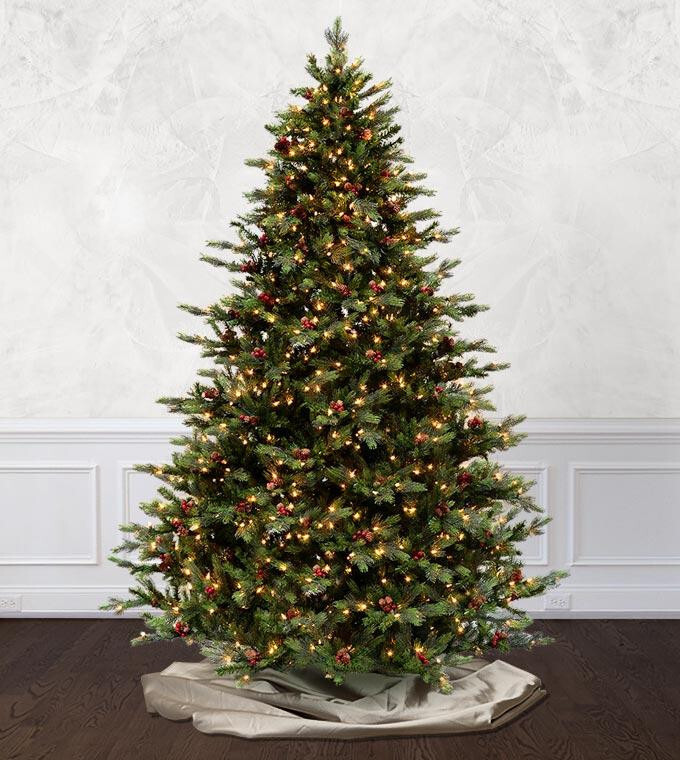
For hassle-free setup, some trees use trunk-based connection systems—such as Power Pole technology—so sections snap together, and power flows through the pole, keeping plugs out of sight. Treetime offers a range of lighting configurations, including warm white and selectable options, so you can match the mood of your décor without sacrificing realism.
Species-Inspired Designs and Choosing the Right Tree Style
The most convincing artificial trees are modeled after specific species, borrowing their branch habits, needle shapes, and colorways. Fraser Fir often shows upturned branches, giving it a buoyant, layered look. Balsam Fir reads as classic and conical, with a softer texture. Blue Spruce is known for its cool blue-grey tones and slightly stiffer, radially arranged needles. Nordmann Fir features deep, glossy greens with well-spaced, horizontal tiers.
Choosing style is about both aesthetics and fit. Full profiles suit spacious rooms and statement-making displays; slim or narrow profiles work beautifully in apartments, entryways, or rooms with tighter traffic paths. Balance tree height with ceiling height, allowing clearance for a topper and ensuring ornaments don’t crowd nearby furniture.
When reading product names and descriptions, look for species cues—terms like Fraser, Balsam, Blue Spruce, or Nordmann usually indicate needle color, branch posture, and overall silhouette. Treetime’s species-inspired designs use molded True Needle PE foliage to echo these natural signatures so your artificial tree looks like the real variety it’s meant to represent.
Fluffing, Shaping, and Decorating to Maximize Realism
Even the best trees arrive compressed for shipping, so thorough fluffing is essential. Set aside unhurried time the day your tree arrives; the payoff is dramatic. Work section by section so every branch and tip contributes to a natural, full silhouette that hides the center pole and creates depth for lights and ornaments.
Start at the bottom and move upward, shaping each branch in multiple directions—some tips slightly up, some out, some gently down—to mimic organic growth. Don’t forget the interior branches; they build shadow and realism, and they’re perfect for anchoring lights deeper inside the tree.
As you decorate, weave a portion of your micro-LED lights toward the trunk to produce a layered glow. Place a few medium-weight ornaments close to the interior to disguise any visible gaps; reserve lighter or feature ornaments for the outer tips. Step back periodically and adjust for balance rather than perfect symmetry.
Embrace slight asymmetry. Real trees have quirks, and a few irregularities make your display look lovingly grown, not machine-stamped. With proper shaping—even on premium designs like Treetime’s Most Realistic collection—guests will pause and wonder if it’s a fresh-cut natural Christmas tree.
How to Choose a Realistic Tree from Treetime’s Most Realistic Collection
Ready to bring nature’s beauty home—without needles on the floor? Use this quick checklist to evaluate realism at a glance, then explore Treetime’s curated selection of Most Realistic Artificial Christmas Trees designed for lifelike texture, easy setup, and enduring quality.
Prioritize trees with 65% or more True Needle PE foliage for the most convincing outer tips, then confirm multi-tonal needles, brown stems, layered branch structure, and a high tip count. Choose the height and profile that fit your room, and select warm lighting that complements your décor.
Treetime offers a wide range of styles, heights, and lighting options within its Most Realistic collection, so you can find the perfect centerpiece for your holiday celebrations.
Shop Most Realistic Christmas TreesNewest Guide & Blog Updates
What Makes an Artificial Christmas Tree Look Real
Treetime Realism Guide Nothing captures the season’s magic like a beautifully lit evergreen—real o...
Are Treetime Trees Worth It?
Treetime Buying Guide Are Treetime Artificial Christmas Trees Worth It? If you’re deciding whether...
How to Pick a High-Quality Artificial Christmas Tree That Lasts
Key Takeaways Think of a quality artificial Christmas tree as a long-term investment. Choosing du...
Commercial Christmas Trees Engineered to Perform: Inside TreeTime Tower Trees
TreeTime Commercial Tower Trees Commercial Christmas Trees Engineered to Perform A commercial Chri...

Year-Round Christmas Tree: Inspiring Decorating Ideas for Every Month and Season
Imagine bringing the warm glow and timeless charm of a Christmas tree into your space 365 days a ye...

Why Christmas in July Is the Best Time to Shop for Holiday Decor
Christmas in July Savings Why July Is Secretly the Best Time to Shop for Christmas Decor October?...