
Christmas Tree SOS: 9 Decorating Disasters (and Easy Ways to Save the Day)
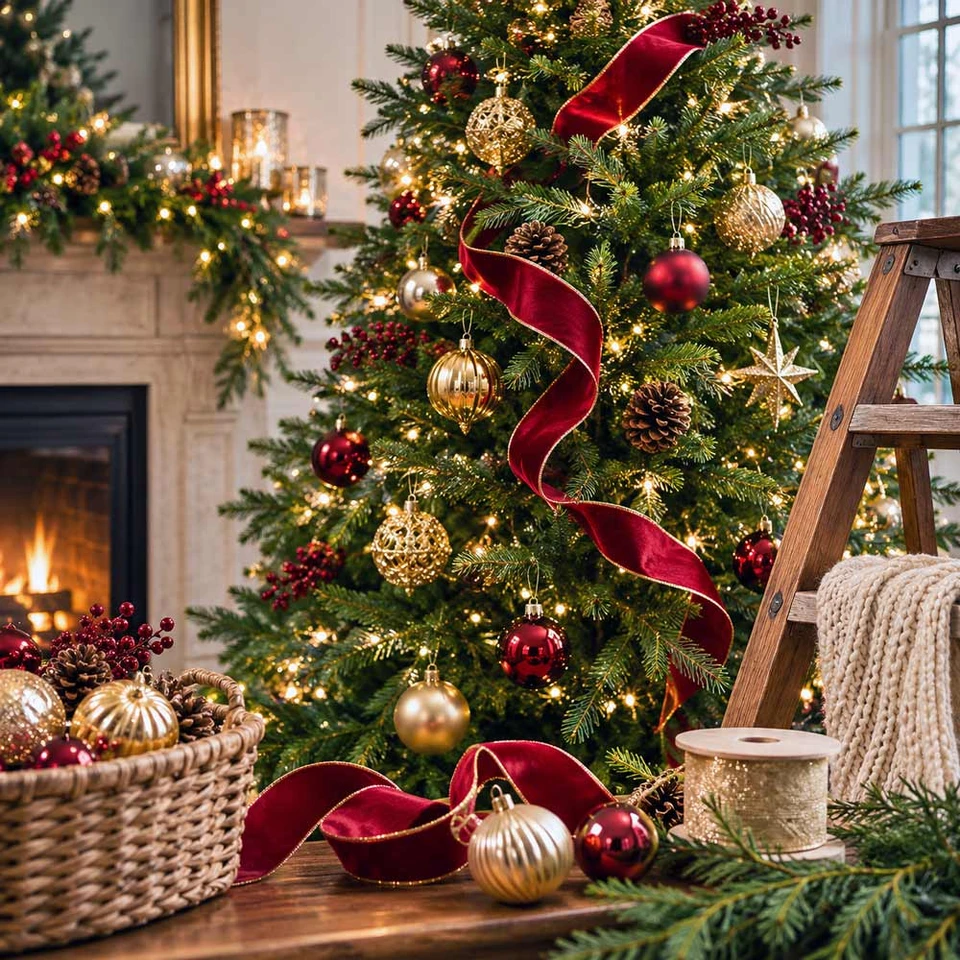
Treetime Christmas Decorating Guide
When Christmas Decorating Doesn't Go Quite According to Plan...
The ribbon has a mind of its own. The ornaments are mysteriously gathering on one side. And your tree topper seems determined to lean toward the nearest window.
Sound familiar?
Every Christmas decorator has experienced at least one moment when the beautiful holiday vision in their imagination doesn't quite match the tree standing in their living room.
Fortunately, most decorating mishaps have surprisingly simple solutions. Before you rearrange the entire room, buy another box of ornaments, or declare the tree officially finished from its good side, try these nine Christmas tree decorating fixes.

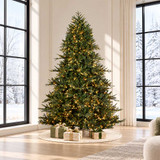
Featured tree: Treetime Victorian Fir
First, a Little Christmas Tree Perspective
Here's a decorating secret worth remembering: beautiful Christmas trees don't have to be perfectly symmetrical, covered in expensive decorations, or styled exactly like the ones you've seen in holiday magazines.
The best displays strike a balance between realistic greenery, thoughtful ornament placement, attractive lighting, and a little personal character.
And sometimes, the difference between a tree that feels unfinished and one that looks beautifully decorated comes down to moving just a few branches or ornaments.
The Treetime approach: Work with the tree's natural silhouette, not against it. Let its foliage provide the foundation, and use decorations to highlight its character rather than hide it.
The Christmas Tree SOS Files
The Tree Itself: Before the First Ornament Goes On
Sometimes the biggest decorating problems aren't caused by the decorations at all. They're caused by the foundation underneath them.
The Problem: Unexpected Bald Spots
"Why Can I See Straight Through My Christmas Tree?"
You've assembled the tree, turned on the lights, and stepped back to admire your work. Unfortunately, there's a large opening near the middle that seems to have its own ZIP code.
The fix: Start shaping near the center pole rather than concentrating only on the branch ends. Gently spread the interior tips upward and outward, working toward the outer foliage. Vary their directions and check the tree from different angles.
It's also important to understand your tree's intended silhouette. A naturally layered or open-style tree is designed to have visible spaces between certain branches. Those spaces can actually make individual ornaments more noticeable.
The lesson: Don't automatically mistake natural branch spacing for missing fullness. Shape first, decorate second.
The Problem: Too Much Tree, Not Enough Room
"The Tree Looked Smaller in the Store."
The tree is beautiful. The problem is that you now have to turn sideways to reach the sofa.
The fix: When choosing a tree, consider its width as carefully as its height. A narrower profile can deliver the same vertical presence while preserving floor space and comfortable walking paths.
Measure the ceiling, account for any topper, and check how far the branches will extend into the room. Leave enough clearance around furniture, doors, and high-traffic areas.
The lesson: A tree that fits your space beautifully will usually make a stronger impression than a larger tree competing with the furniture.

Treetime Tree Inspiration
Holiday Beauty Without the Oversized Footprint
A smaller potted Christmas tree can bring warmth and character to spaces where a full-size evergreen isn't practical.
The 5' Downswept Norfolk Pine features graceful cascading Real-Needle PE foliage, clear 3mm LED lights, and a slender silhouette that works beautifully in entryways and smaller decorative spaces.
The Problem: The Perfect Green Triangle
"Why Does My Christmas Tree Look So Artificial?"
Every branch is pointing in exactly the same direction, and the finished tree looks more like a carefully drawn triangle than something that grew in a forest.
The fix: Resist the urge to make every branch perfectly symmetrical. Real evergreens have subtle differences in branch length, spacing, and direction.
Shape the foliage according to the tree's intended form. Allow some tips to angle slightly upward and others outward. Preserve natural-looking branch variations rather than forcing everything into identical rows.
Choosing a realistic tree with thoughtful branching can help from the beginning. Treetime's Victorian Fir, for example, features an intentionally varied silhouette that creates attractive spaces for displaying ornaments.
The lesson: Nature doesn't use a ruler. Your decorating doesn't need one either.
Now for the Decorations
When the Ornaments, Ribbon & Colors Take Over
This is where decorating gets interesting. Sometimes a little restraint makes a bigger difference than adding another dozen decorations.
The Problem: Ornament Traffic Jam
"Somehow Every Ornament Ended Up in the Same Three Places."
One side of the tree looks like an ornament showroom. The other looks like it hasn't received the decorating memo.
The fix: Begin with the largest ornaments, distributing them around the tree and positioning some slightly deeper among sturdy branches. Then add medium ornaments, followed by smaller decorative pieces.
Try to avoid hanging every ornament on the outermost branch tips. Varying the depth creates dimension and gives the decorations room to stand out individually.
And remember to walk around the tree as you decorate. The view from the sofa isn't always the same as the view from the doorway.
The lesson: More ornaments don't automatically create a better-looking tree. Better placement often does.
The Problem: The Ribbon Has Taken Over
"I Wanted Elegant Ribbon. I Got Gift-Wrapped Evergreen."
Ribbon can create beautiful movement and texture on a Christmas tree. But when it's pulled too tightly around the branches or arranged in perfectly straight bands, it can overpower the foliage.
The fix: Try using shorter sections of wired ribbon instead of one continuous wrap. Create gentle loops or flowing folds, tucking the ribbon into the branches at natural intervals.
Allow some greenery to remain visible between ribbon sections. Vary the direction and depth slightly to avoid a rigid, repetitive pattern.
For an especially elegant look, combine two ribbons with complementary colors but different widths or textures. A wider ribbon can establish the main decorative movement, while a narrower accent adds detail.
The lesson: Ribbon should complement the tree, not disguise it as an enormous Christmas present.
The Problem: Every Decorating Theme Arrived at Once
"I Bought One of Everything. Now What?"
You love traditional red and gold. You also love champagne metallics, woodland ornaments, icy blue glass, and that brightly colored ornament you couldn't resist at the store.
Individually, they're all wonderful. Together, they can compete for attention.
The fix: Choose two or three colors to anchor the overall display. Use those colors consistently in the largest ornaments and ribbon, then introduce smaller decorative pieces that complement them.
That doesn't mean your sentimental ornaments have to stay in their boxes. Family keepsakes, handmade decorations, and colorful childhood favorites are often the most meaningful pieces on the tree.
Give special ornaments prominent positions, and allow the coordinating decorations around them to establish visual balance.
The lesson: A cohesive color palette is helpful. Christmas memories are more important.

Treetime Tree Inspiration
A Beautiful Backdrop for Meaningful Ornaments
The Annabelle Pine features flowing pine-style foliage with a softly layered silhouette that works beautifully with traditional, modern, and sentimental ornament collections.
Its natural-looking texture and graceful branches offer an attractive starting point for decorating without making the finished display feel overly rigid.
The Finishing Touches
Lighting, Toppers & the Details That Pull Everything Together
The tree is assembled. The ornaments are finally cooperating. Now it's time to make sure the finishing details look just as good.
The Problem: The Lights Have a Dramatic Subplot
"The Top Half Is Glowing. The Bottom Half Didn't Get the Message."
Few things interrupt Christmas decorating quite like discovering that part of the tree isn't illuminated.
The fix: Before rearranging decorations or adding more lights, determine whether the issue is uneven appearance or an actual lighting malfunction.
If the tree is fully lit but appears uneven, examine it from different angles. Branch shaping and ornament placement can influence how light travels through the foliage.
If an entire section is dark, unplug the tree before checking the power connection, controller, or section connectors according to your model's instructions.
Different light systems require different troubleshooting procedures. Incandescent mini lights, sealed LEDs, and ColorChange LED systems should not all be repaired the same way.
Important: If wiring is damaged, sockets are cracked or melted, or a replacement fuse blows again, leave the lights unplugged and contact customer care. Never bypass a fuse or attempt an unapproved repair.
The lesson: Troubleshoot the cause instead of trying to hide the problem with more decorations.
The Problem: The Leaning Tree Topper
"My Christmas Star Is Pointing Toward the Kitchen."
You've spent the afternoon decorating the perfect tree. Then you place the star on top, step back, and discover that it's leaning dramatically to one side.
The fix: First, check whether the topper is appropriately sized and weighted for the tree's upper branches. Large or heavy decorations may require a compatible support designed specifically for the topper and tree.
Check that the attachment is secure and that the upper branch has not been bent beyond its intended position. Choose a smaller or lighter topper if the existing one cannot be supported safely.
You can also create a beautifully finished tree without a traditional star or angel. A coordinated bow or a restrained arrangement of lightweight decorative stems may complement the silhouette just as well.
The lesson: Your topper should crown the tree, not start a balancing act.
The Problem: The Tree Stand Is Stealing the Show
"The Tree Looks Beautiful... Until You Look Down."
The ornaments are perfectly arranged, the lights are glowing, and the topper is finally standing straight.
Then you notice the bare metal tree stand surrounded by a collection of power cords.
The fix: Finish the base with an appropriately sized Christmas tree skirt or compatible decorative cover.
A beautiful tree skirt can soften the transition between the evergreen and the room. Choose a fabric, finish, and diameter that complement the overall decorating style.
Make sure the tree stand is properly assembled and resting directly on a stable surface. Keep fabric and decorative materials clear of electrical connections and ensure that cords are safely routed without creating a tripping hazard.
A few neatly wrapped gifts can complete the scene, but you don't need to surround the entire tree with packages to make the base look attractive.
The lesson: A beautifully decorated tree deserves an equally thoughtful foundation.
The Five-Minute Christmas Tree Checkup
Before You Declare the Tree Finished...
Sometimes the best decorating tool isn't another ornament. It's simply stepping away and looking at your tree with fresh eyes.
Look at the silhouette. Does the foliage appear balanced while preserving the tree's intended natural shape?
Check the ornament spacing. Are the larger decorations distributed throughout the tree rather than clustered together?
Examine the lighting. Is the tree glowing evenly, with no unexpected dark sections?
Take a few steps back. Does the overall design look cohesive from the main seating area and entryway?
Look at the entire scene. Is the topper secure, the base finished, and the area around the tree comfortable and safe?
If you can answer yes to most of these questions, you may already have the beautiful Christmas tree you've been trying to create.
Remember: The Best Christmas Trees Have Personality
A Christmas tree doesn't need to look like a photograph from a magazine to be beautiful.
Maybe your family has a tradition of hanging handmade ornaments near the front. Perhaps the children insist that their favorite decorations belong at eye level. Or maybe you prefer an elegant, minimal tree where the greenery and lighting do most of the work.
All of those approaches can create something wonderful.
The most important thing is choosing a tree and decorating style that fit your space, reflect your traditions, and make your home feel welcoming during the holidays.
If you need help choosing the right tree for your home, explore the Treetime Artificial Christmas Tree Buyer's Guide or our Tree Assembly and Shaping Guide.
Christmas Tree Decorating FAQs
Why does my artificial Christmas tree look uneven?
Uneven shaping, compressed interior tips, or unbalanced ornament placement may affect the appearance. Begin by checking that the tree sections are correctly assembled and seated, then carefully shape the branches according to the tree's intended silhouette. Some realistic trees naturally feature irregular branch spacing.
Should I put ribbon or ornaments on my Christmas tree first?
If ribbon is a major element of your decorating design, it's often easier to place it before the ornaments. That allows you to tuck ribbon into the foliage without disturbing delicate decorations. You can then arrange ornaments around the ribbon, balancing both elements throughout the tree.
How do I make my Christmas tree look fuller without buying more ornaments?
Proper shaping usually makes the greatest difference. Spread the interior branch tips and examine the tree from different angles. Layering ornaments at different depths can also create a richer appearance. However, preserve the natural branch spacing of trees designed with open or layered silhouettes.
How many colors should I use to decorate my Christmas tree?
Two or three coordinating colors provide a useful starting point for a cohesive design. Mixing finishes and textures within that palette adds depth. There is no strict limit, however, especially when displaying sentimental ornaments and family collections.
What makes an artificial Christmas tree look professionally decorated?
Thoughtful branch shaping, balanced lighting, varied ornament sizes, coordinated colors, and a properly finished base all contribute to a polished appearance. The goal isn't perfect symmetry. It's a natural-looking, visually balanced display that complements your home.
A Little Help from Treetime
Make This Year's Christmas Tree Your Favorite Yet
Every beautiful Christmas display starts somewhere. Sometimes it begins with a new family tradition, a favorite ornament, or finally finding an artificial Christmas tree that fits the room just right.
At Treetime Christmas Creations, we believe choosing the right tree makes the decorating experience more enjoyable. Realistic foliage, beautiful silhouettes, convenient lighting, and thoughtful construction all contribute to a holiday centerpiece you can look forward to decorating year after year.
Whether you're beginning with a new tree or giving an old favorite a fresh look, the perfect holiday display is the one that feels like home.
Newest Guide & Blog Updates
Christmas Tree SOS: 9 Decorating Disasters (and Easy Ways to Save the Day)
Treetime Christmas Decorating Guide When Christmas Decorating Doesn't Go Quite According to Plan....
Beyond the Christmas Tree: 7 Beautiful Ways to Decorate Your Home for Christmas 2026
Christmas Decorating Inspiration The Most Beautiful Christmas Homes Don't Stop at the Tree The Chri...
Christmas Tree Decorating Ideas for 2026: 5 Beautiful Looks to Inspire Your Holiday Home
Treetime Holiday Inspiration | 2026 A Beautiful Christmas Tree Starts with a Beautiful Idea There i...
Best Artificial Christmas Trees 2027: Treetime Best Sellers
The Treetime 2027 Tree Guide Find a Christmas tree that feels right at home. The best artificial C...
How to Make an Artificial Christmas Tree Look Natural
Treetime Decorating Guide How to Make an Artificial Christmas Tree Look More Natural A beautiful a...

What Are the Best Realistic Artificial Christmas Trees?
What Are the Best Realistic Artificial Christmas Trees? The best realistic artificial Christmas tr...