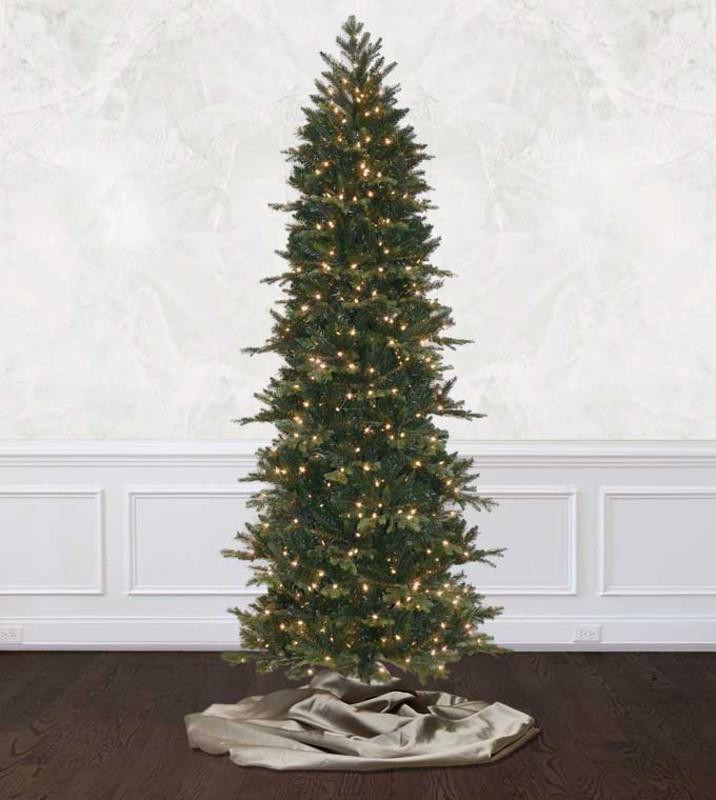
More options than ever
Artificial trees are available in heights ranging from small tabletop pieces to oversized trees for cathedral ceilings. You’ll also find traditional evergreen looks, specialty silhouettes, and options with or without lights.
Find the right height, foliage, lighting, and structure for your space — then choose a tree that feels beautiful, durable, and easy to enjoy year after year.
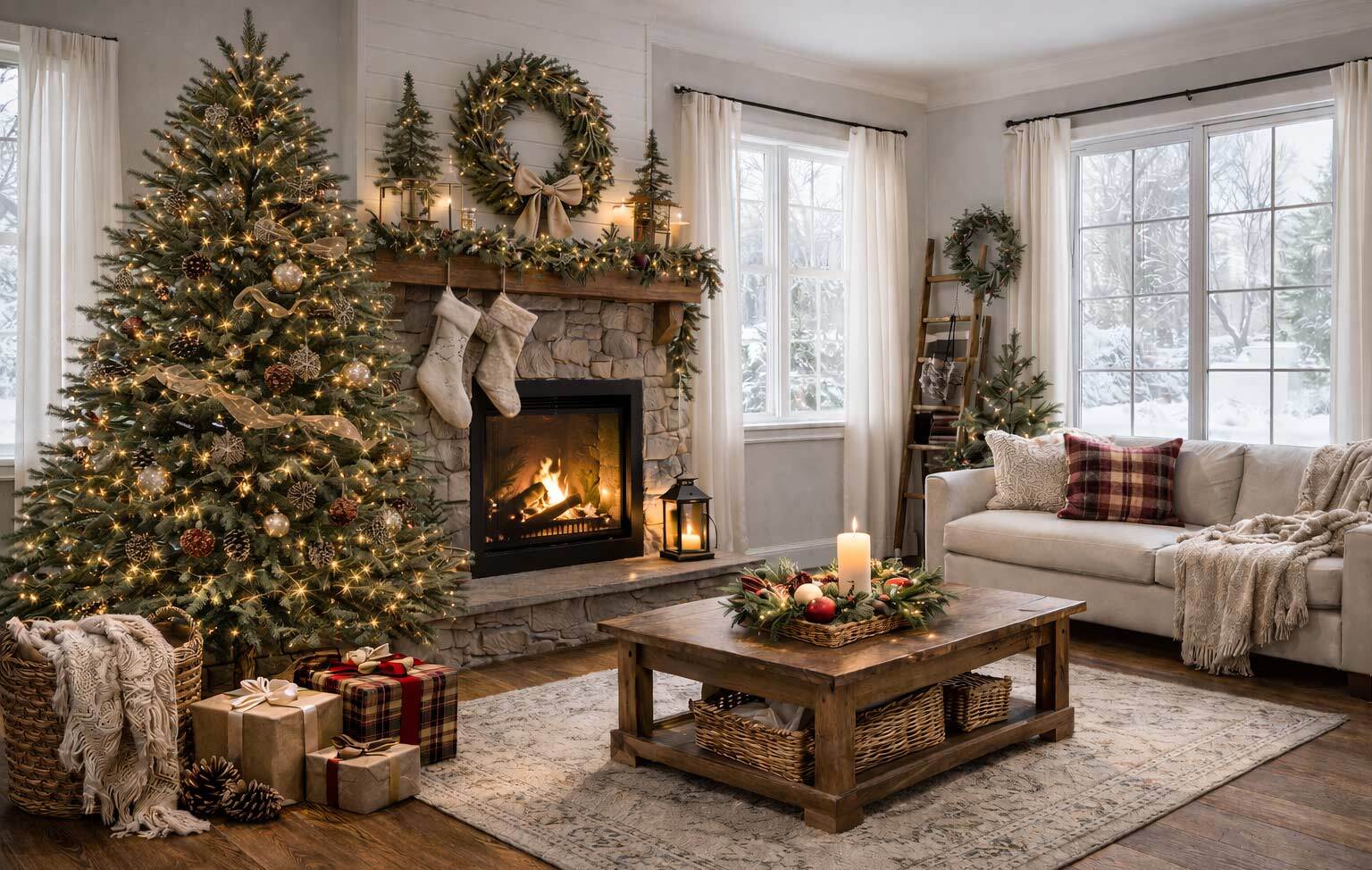
Leave room for a topper, nearby furniture, and comfortable walkways.
Steel poles and sturdy stands matter even more once the tree is fully decorated.
PE adds realism, PVC adds fullness, and mixed foliage often gives the best balance.
A balanced glow should feel rich and even — not sparse or overly harsh.
Today’s artificial Christmas trees range from highly realistic species-inspired designs to decorative specialty looks. The best choice depends on your room, your decorating style, and the level of realism you want.
Artificial trees are available in heights ranging from small tabletop pieces to oversized trees for cathedral ceilings. You’ll also find traditional evergreen looks, specialty silhouettes, and options with or without lights.
Choose lights that are UL rated, durable, and bright without looking overly sparse.
Hinged construction is generally easier to set up each year than lower-cost hook-in branches.
A high-quality artificial tree can last for a decade or more, often with longer structural warranties than light warranties.
The most important factor is the location where the tree will go. Measure both the ceiling height and the width of your available floor space before choosing a tree.
As a general rule, tree height should be at least 6 inches shorter than your ceiling height so there is enough room for a topper and a little breathing space above the tree.
The average width of a 7.5-foot tree is about 56 inches, but 7.5-foot trees can range from about 20 inches wide in slim styles to 72 inches wide in fuller designs.
In smaller rooms, slim trees or other specialty options such as flat, half-wall, upside-down, or tabletop trees can be better fits than a standard full tree.
Construction details make a major difference in how sturdy a tree feels, how quickly it sets up, and how well it performs year after year.
Artificial trees are typically designed in lightweight sections for easier setup and storage.
Steel center poles and steel tree stands provide better stability and durability, especially once the tree is fully assembled and decorated. Smaller tabletop trees may only require a plastic stand because they are much lighter.
Hinged branches stay attached to the center pole, making annual setup faster and simpler. You just lower the branches, fluff the foliage, plug in the lights, and decorate.
Hook-in branches must be attached one by one to the pole. They take longer to assemble, are not available as pre-lit trees, and are generally associated with lower-cost construction.
Tip count alone does not tell the full story. Branch density, needle style, and material all affect how realistic and full a tree looks once it is fluffed and decorated.
Density is more important than tip count by itself. For a traditional full appearance, you should not be able to see through to the center pole too easily, and there should be enough outer branches to support ornaments comfortably.
Specialty options include flocked, frosted, and colored trees. These can create a unique design statement and may work especially well when the tree itself is part of the decorating theme.
PE foliage is molded from real branches for a highly lifelike look. It is often combined with PVC deeper inside the tree to keep weight manageable while still adding fullness near the pole.
PVC is the traditional material used in artificial trees. It has a fluffy, familiar look and is often valued for fullness and a classic Christmas-tree feel.
Many shoppers find that mixed PE and PVC foliage offers the ideal balance: more realism on the outside and more fullness toward the inside.
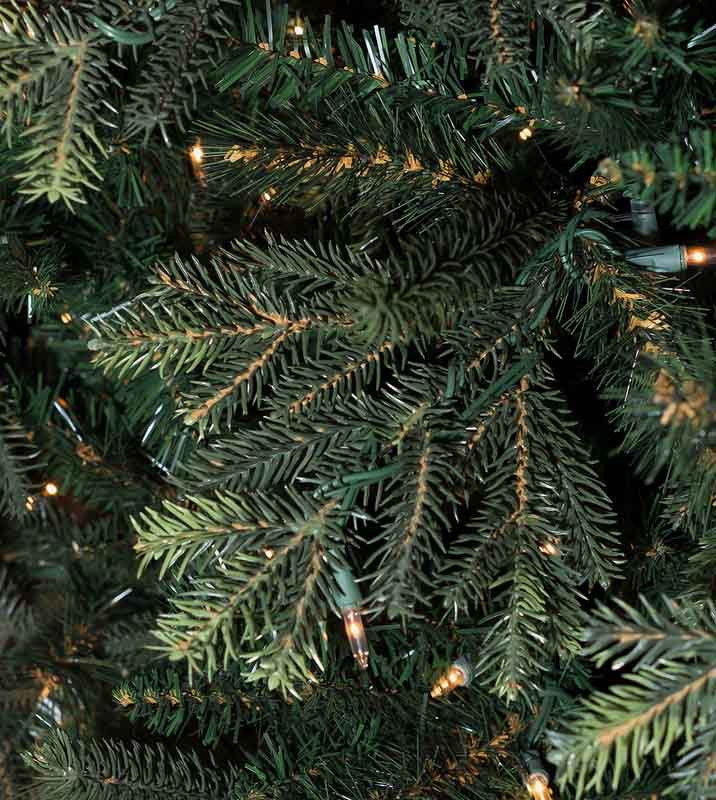
Best for shoppers who want a natural evergreen look with more lifelike branch detail.

Great for classic fullness and a familiar holiday look at a range of price points.

Perfect if you want a decorative statement tree rather than a strictly traditional look.
Lighting should look polished, perform reliably, and be distributed with enough density to create an even glow across the whole tree.
Pre-lit trees should be evaluated based on appearance, durability, and balanced coverage. Lights should be securely attached, UL rated, and designed so that one failed light does not take out the whole section.
A strong rule of thumb is around 80 to 100 lights per foot for a full tree, but the better real-world test is whether the tree looks evenly and pleasingly lit in person.
Choose lights that are securely attached, UL rated, and built with burn-out protection.
Lighting warranties are often shorter than structural warranties, even on better trees.
LED, fiber optic, clear, and multi-color options all create a different look.
Once you know the right size, think about how you decorate. Ornament weight, quantity, and overall style should influence the tree shape, branch density, and lighting you choose.
Pre-lit trees save time and remain the most popular choice. Unlit trees give you full control over light color, density, and placement, but take more setup time.
These trees are designed to resemble real evergreens, typically with dense branches, realistic green color, and shapes ranging from slim to full.
Upside-down, spiral, fiber optic, metallic tinsel, and other unconventional styles can work especially well in tight spaces or as accent trees.
A beautiful tree needs a few practical finishing touches. These details help protect your investment and improve the final presentation.
Helps hide the stand and gives the tree a cleaner, more polished presentation.
Keeps dust and insects away and helps reduce unnecessary wear between seasons.
If you choose an unlit tree, you’ll need lights and can fully customize the style and density.
A power strip or surge protector can help protect your lighting investment.

Finish the look at the base of the tree and hide the stand more elegantly.

Protect your tree from dust, insects, and off-season wear between holidays.

Coordinate your tree with matching greenery throughout the rest of the home.
Prices vary depending on material quality, construction, size, and whether the tree is pre-lit. More realistic and larger trees generally cost more, but can also deliver better long-term value.
More realistic molded PE foliage usually costs more than traditional PVC.
Larger trees require more branch material, stronger construction, and usually more lights.
Pre-lit trees typically cost more initially, but they save time and effort every holiday season.
If you want maximum realism, strong lighting, and premium construction, expect to invest more. If budget matters most, you may be looking at a smaller, less dense, or unlit tree.
If you’re ready to compare options or still need help narrowing it down, these are the best places to go next.