Find the right height, foliage, and lighting—then choose a tree that fits your space and decorating style.
Leave room for a topper, nearby furniture, and comfortable walkways.
Steel poles and sturdy stands matter more once the tree is fully decorated.
PE adds realism, PVC adds fullness, and mixed foliage often gives the best balance.
A balanced glow should feel rich and even, not sparse or overly harsh.
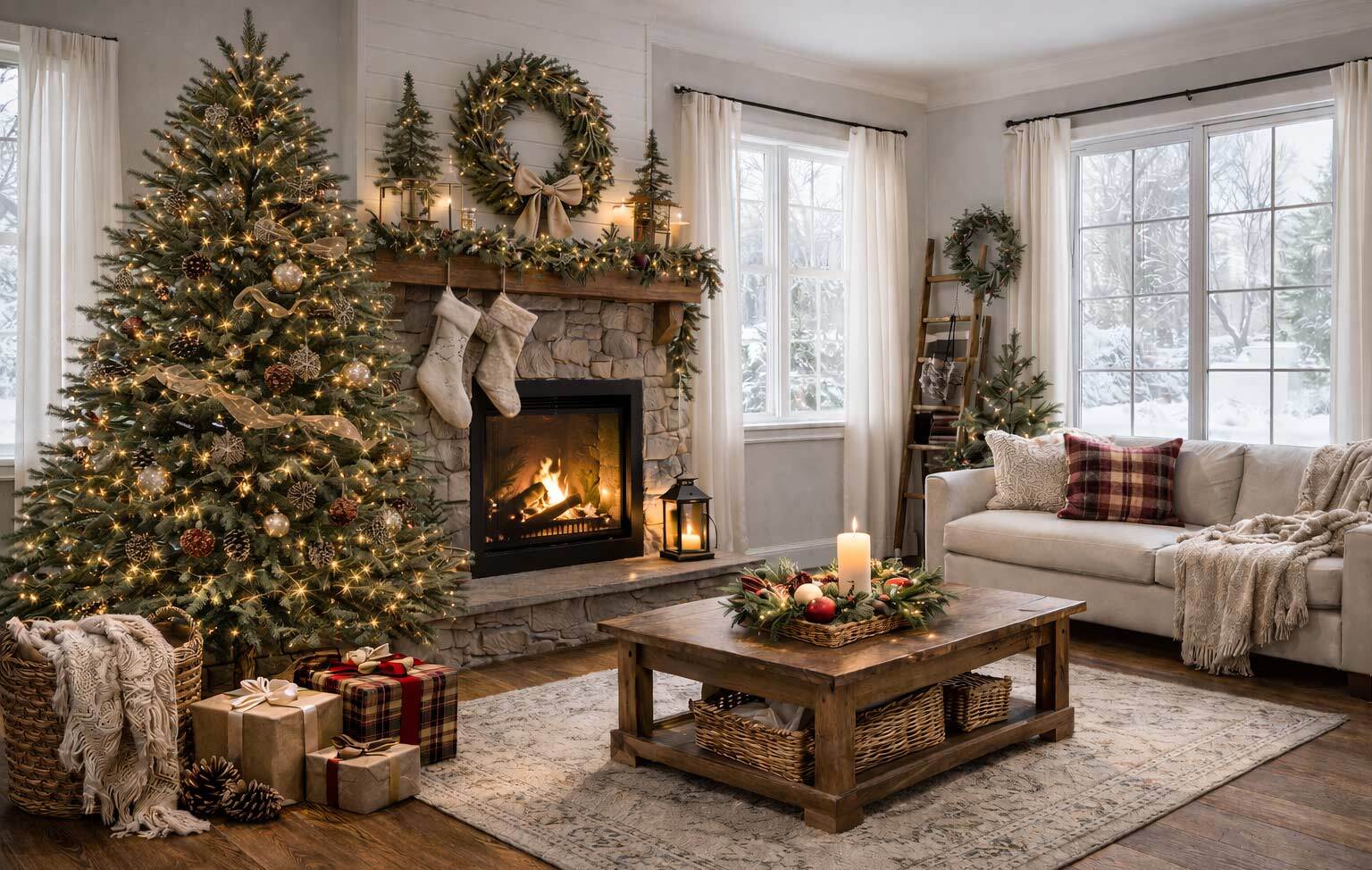
There are upscale and well-made choices that mimic real trees amazingly well, and are even categorized by type of trees like: Alpine Fir, New England Spruce, Oregon Pine, California Cedar, and many more. Then there are ones that are designed for a unique look, such as white, silver, black, purple tinsel trees, upside down trees, spiral trees, and even metal sculpted trees.
Artificial trees are available in heights to reach the top of cathedral ceilings down to sizes ideal for decorative table-top centerpieces. Choices are available with or without lights and pre-lit versions offer clear and multi-color light options.
Metal stands & poles are stronger and safer than lighter plastic versions.
Material + manufacturing determine realism, texture, and long-term hold.
Look for UL rated, burn-out protection, and a pleasing density by height.
Accessories include Christmas ornaments, of course, as well as Christmas tree skirts, power strip/surge protectors for lighting safety and longevity, lights if the tree does not include them, and tree storage bags or boxes that are dust and insect-proof for off-season protection. Stands are generally included with the trees.
One feature artificial trees don't include is the fresh cut scent, though people with tree allergies won't miss that at all. And for those that do, there are tree fragrance items that just may do the trick.
The most important factor in determining the best-sized tree for you is the location where you will put it. Measure both the ceiling height and the width of the floor space available for the tree without it bumping up against furniture, fireplaces or impeding the flow of traffic.
Generally speaking, the tree height should be at least 6” shorter than the ceiling height to allow for a tree topper. For a room with a standard 8’ ceiling, a 7-7.5’ tall tree would be ideal. Rooms with cathedral ceilings may handle a significantly taller tree to make the most of the look and feel of the space.
Select the most appropriate width based upon the space. The average width of a 7.5’ tree is 56”; however, 7.5’ trees come in widths ranging from 20” (Slim) to 72” (Wide) and should be selected based on the width of the floor space and your personal taste.
Artificial Christmas trees are constructed in easy-to-manage light-weight sections making assembly quick and simple. Based on height, trees typically come as follows:
Constructed with stability and durability in mind, steel center poles and steel tree stands are rated to match each tree’s size and weight (and then some) so that when the tree is assembled and fully decorated it will have the greatest stability and durability. Small trees and tabletop models are considerably lighter and may only require a plastic stand.
Hinged tree branches are permanently attached at the center pole, making tree assembly and fluffing quicker and easier than old-fashioned hook-on or push-in single branch construction. Simply let the branches down, fluff out the foliage, plug in the lights—and enjoy.
With the hook-in variety, you will need to put each branch into a separate hook on the tree pole. Since each branch is attached individually, these trees take far longer to assemble and are not available as pre-lit trees. They may cost less, but they are not used on Treetime artificial Christmas trees.
When shopping for trees, you'll find that the tip count is often included in tree descriptions. More important than tip count is the density of branches and needles. For a traditional appearance, you should not be able to see through to the inside of the tree, and there should be enough outer branches to hang your ornaments. Needles should have a lush and thick appearance on the branches.
All artificial trees will be made from either PE or PVC material, or a beautiful combination of them. However, many other unique styles and colors of trees are available, such as:
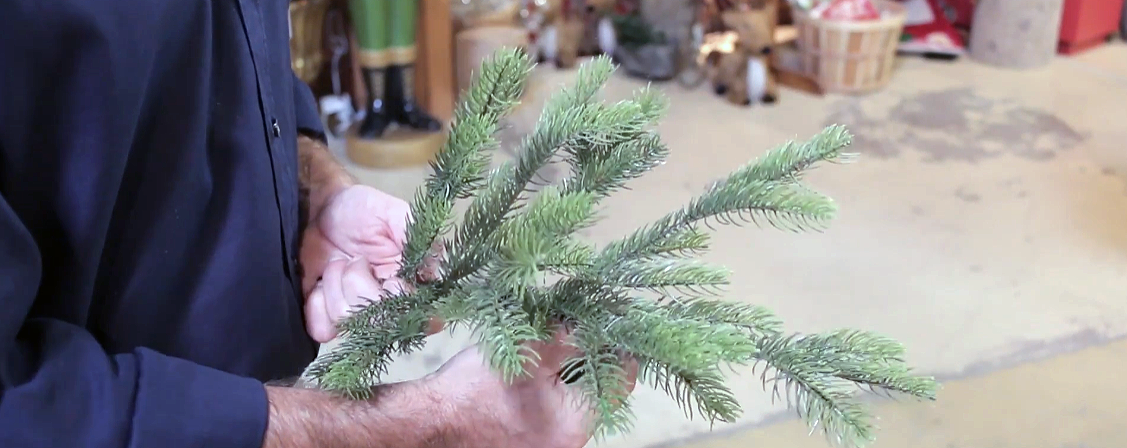
The most realistic foliage type is our Real-Needle™ PE foliage. Real branches from nature are used to create the molds, giving PE trees a highly realistic appearance. Most PE trees also include some PVC toward the inside of the tree to reduce weight and create fullness near the pole.
PVC is the classic material from which artificial trees were traditionally made. The material is cut into thin strips and wrapped onto the branches, giving them a fluffy feel and familiar traditional look.
Lights on a pre-lit Christmas tree should be evaluated based on looks, longevity, and density. They should be high quality and durable, with quality outweighing quantity. Lights should be attached securely, UL rated for safety, include burn-out protection so that one light can go out without affecting the others, and shine brightly.
As with branches, density is a more significant quality factor than quantity alone. Around 80 to 100 lights per foot for a full tree is considered a strong ratio, but the best test is whether the tree looks evenly and pleasingly lit in person.
Durability and consistency matter. Better lighting systems reduce outages, improve appearance, and help avoid the frustration that has long been associated with traditional mini light failures.
The most significant impact on your overall experience is a lighting system that does not exhibit the ongoing failure problems associated with older traditional Christmas lighting. Treetime’s approach is designed not just for reliability but also for appearance.
There are never more than 50 lights to each set, which helps improve lifespan, and a light set failure will not cause a blackout in another portion of the tree. Platinum Collection™ Treetime Christmas trees are backed by a 3 season light warranty.
With a vast range of choices available, there are artificial trees to meet most tastes and needs. Your key decisions will be size, pre-lit or not, and traditional versus unique.
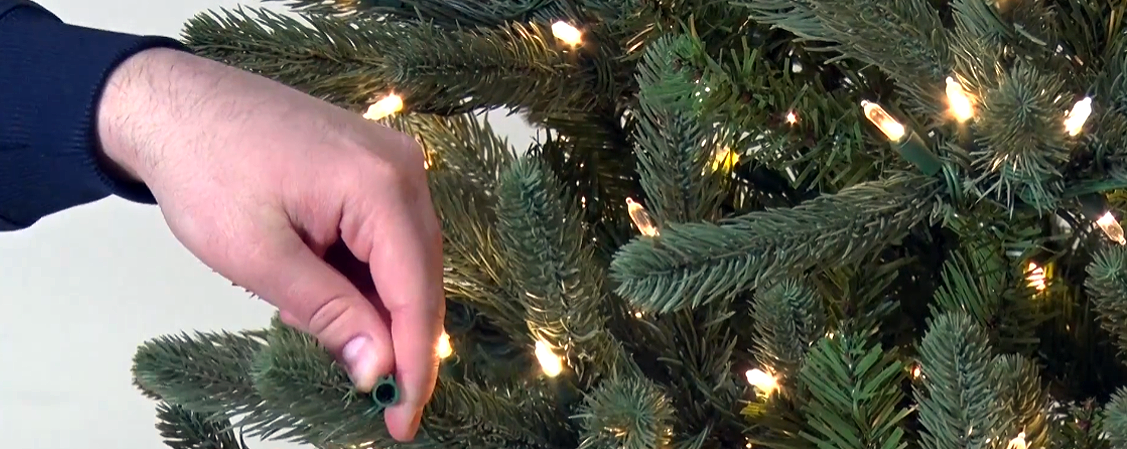
Pre-lit artificial Christmas trees are easier and more convenient, but they do add to the tree’s cost. The tree itself will usually last longer than the included lights, which is why structural warranties are often longer than light warranties. If you choose a pre-lit tree, your main options will typically be clear or multi-color lights.
For many households, the biggest appeal of an artificial tree is saving time, which is one reason pre-lit trees remain the most popular choice.
These trees are designed to look like natural evergreens, usually with dense branches and realistic green coloration. They come in slim to full shapes and in a wide range of species-inspired looks.
Upside down trees, spiral trees, fiber optic trees, metallic tinsel trees, sculpted metal trees, and other unconventional options can be ideal for tight spaces or as secondary decorative trees.
Heavier ornaments need sturdier branches. More ornaments need more branch count. Clear lights often suit ornate décor, while multi-color lighting can pair beautifully with simpler ornament palettes.
Make sure you know what is included with your tree. Stands almost always are included, but you will probably want a decorative Christmas tree skirt to hide the structure. Storage bags, usually not included, are necessary to protect your investment from insects and dust during the off-season.
Helps hide the base and gives the finished tree a cleaner presentation.
Protects your investment from dust, insects, and unnecessary foliage wear between seasons.
Needed if you choose an unlit tree and want full control over light style and density.
A power strip or surge protector can help protect your lighting investment.
Prices depend on quality of material and construction, size, and whether the tree is pre-lit. Most high quality, pre-lit, floor size trees in the six to nine foot range fall within a wide range depending on foliage, construction, and lighting system. Lower cost trees are often smaller, less densely built, or unlit.